Fragrance ratios for batch candle production
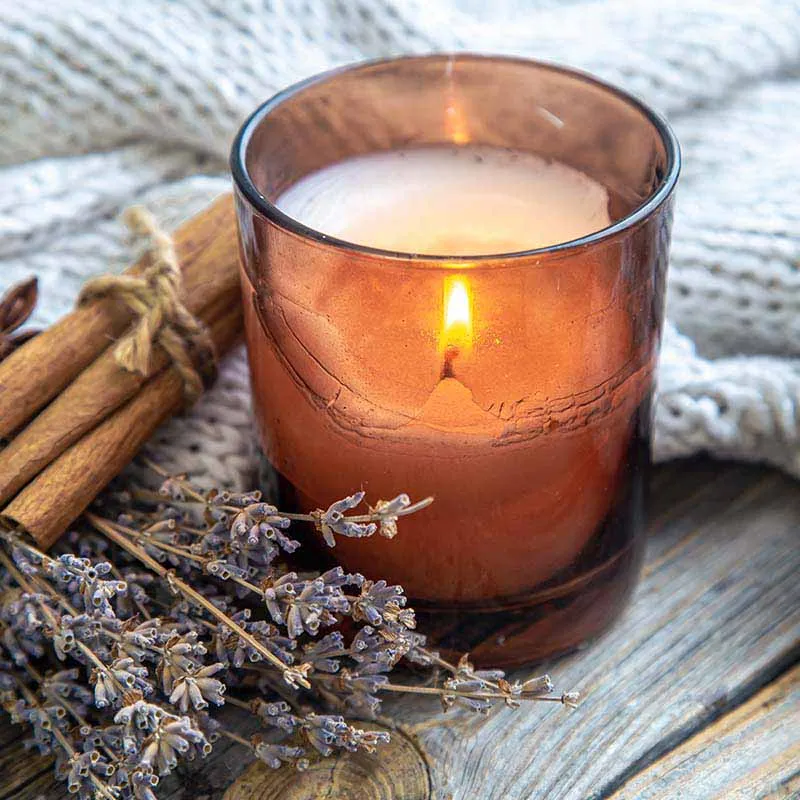
Between 6% and 10% of the wax weight is the most common range for fragrances in production candles, but the exact ratio depends on the type of wax, the specific fragrance and the supplier's specifications. Without a precise documentation and calculation system, every batch will be an independent experiment that the end customer will notice.
Your first production run comes out perfect. Twenty scented candles with the intensity you were after. The second run uses exactly the same materials, but the candles smell half as strong. The third comes out so intense it's unpleasant. The problem isn't the fragrance — it's the lack of system. Without precise documentation, every batch is an independent experiment that the end customer will notice.
Why Inconsistency in Fragrances Destroys Brand Reputation
The novice maker thinks a 20% difference in scent intensity "won't be noticed". The customer perceives it immediately. Scent memory is exact and unforgiving. A customer who buys your "Mediterranean lavender" candle expects the next candle to have exactly the same intensity and scent duration.
If the second batch smells softer, they assume you've changed the recipe to cut costs. If it smells stronger, they assume the first batch was faulty. A candle brand that doesn't maintain scent consistency loses the customer's trust and generates no repeat purchase — the basis of any profitable candle business.
Cold throw and hot throw are the two moments where the customer evaluates your product. Cold throw: the scent the candle gives off when cold, before lighting it. Hot throw: the scent projection when the candle is lit. The customer buys on the cold throw and recommends on the hot throw. Both must be consistent between batches.
The candle looks perfect as it comes out of the mould. The texture, the colour, the centred wick. Three days later, when you light it for the final test, the scent projects half as much as the previous batch. That's scent inconsistency — and it's no accident: it's the direct consequence of producing without a documented system.
Systematisation isn't perfectionism — it's commercial viability. A candle brand without a documented ratio system can't grow beyond small craft runs.
How to Document a Candle Recipe: The Minimum Technical Sheet
The difference between intuition and a replicable process is documentation. An operational technical sheet turns the "recipe that works" into information another person can follow with the same result — including yourself six months later.
Basic Elements of the Technical Sheet
Product identification: Commercial name, internal code, development date and recipe version. If you modify the formula, create a new version instead of overwriting it — you need full traceability.
Materials with specifications: Type of wax (brand and reference if relevant), fragrance (exact name, supplier, concentration), type of wick, dye if used. Avoid generic descriptions like "soy wax" — specify whether it's premium, standard, or blended.
Ratios by weight: Quantity of wax in grams, quantity of fragrance in grams and percentage of the total wax weight. Never use volumetric measures (spoons, cups) — weight is the only replicable measure for liquid fragrances.
The most common mistake here is documenting only the materials and skipping the process conditions. A recipe without temperatures and times is an incomplete recipe — the same materials under different conditions produce different results.
Process temperatures: Wax melting temperature, fragrance incorporation temperature, pour temperature. These three temperatures determine the final scent projection — varying any of them changes the result.
Times: Mixing time after incorporating the fragrance, waiting time before pouring, curing time before the first test. Haste is the enemy of scent consistency.
Practical Documentation Format
What most makers discover in their second large production run is that they need a format they can follow while they work, not a document to read afterwards. A useful technical sheet isn't a long document — it's an operational checklist you can follow while you produce.
The most efficient format is a table with three columns: process, specification, notes.
MEDITERRANEAN LAVENDER CANDLE v2.3
----------------------------------
Premium soy wax: 500g
Lavender fragrance (Supplier X): 35g (7% of wax weight)
HTP-1212 cotton wick
Dye: none

PROCESS:
Wax melt: 85°C
Fragrance incorporation: 65°C
Mixing: 2 minutes constant
Pour: 60°C
Curing: 48h minimum
The version (v2.3) is crucial. Without version control, you don't know which recipe you used in each batch when you need to replicate it or solve a problem. A new version every time you change any element — however small the change.
Change Control and Traceability
You work with version 2.3 of your lavender candle. The fragrance supplier tells you they've changed the formulation — same commercial name, new internal composition. Your v2.3 no longer works the same. If you don't have exactly what changed documented, you'll have to redevelop the recipe from scratch.
Traceability means that each element of the technical sheet is linked to a specific supplier and a specific batch of material. When something changes, you know exactly what to adjust.
Variables That Affect the Fragrance in Production
The question isn't whether the materials will vary between batches — it's which variables have the most impact and how to control them. Three technical factors determine how the fragrance behaves in the final candle: the flashpoint of the fragrance, the incorporation temperature and the curing time.
Flashpoint and Incorporation Temperature
Flashpoint: the temperature from which the fragrance starts to evaporate. If you incorporate the fragrance above its flashpoint, you lose scent intensity irreversibly. The flashpoint information must come from the fragrance supplier — it isn't a figure you can estimate.
The operational rule is to always incorporate the fragrance 10-15°C below its flashpoint. If the fragrance has a flashpoint of 80°C, incorporate it at 65-70°C maximum. This safety margin compensates for the temperature variations of the real process.
A wax that stays hot during mixing can rise in temperature after the fragrance is incorporated. If you start at the flashpoint limit, the mixing process can take you above it and degrade the scent.
What doesn't work: using the same incorporation temperature for all fragrances. Each fragrance has a different flashpoint. What works for lavender can ruin a citrus fragrance. The incorporation temperature is adjusted by fragrance, not by habit.
Curing Time and Scent Projection
Curing is the process where the wax and the fragrance integrate completely. A freshly made candle can smell soft even with the correct fragrance ratio — it needs time for the scent molecules to distribute evenly.
The most common mistake here is assessing the scent intensity too soon. A candle needs a minimum of 48 hours of curing at room temperature to show its real scent projection. Assessing earlier leads to fragrance overload in the following batches.
The curing room temperature also affects the result. Curing at 15°C will be slower than the same process at 25°C. If your workshop has seasonal temperature variations, document the curing temperature in the technical sheet.
The candle smells perfect on the first day of curing. By the fifth day, the scent intensity has visibly dropped. That isn't degradation — it's the normal behaviour of certain synthetic fragrances that need more integration time. Always assess at the same point in the curing process, not when "it seems ready".
Supplier Variations
The same fragrance from different suppliers can behave differently in the same wax. Even the same supplier can have variations between batches of the same fragrance — especially in natural fragrances or ones with natural components.
What most makers discover in their third or fourth production run is that they need to adjust proportionally by fragrance batch, not just by recipe. If you detect that a fragrance batch smells softer in the final result, document the adjustment and apply it to all production from that specific batch.
This problem multiplies when you work with multiple suppliers for availability or price. Keeping the fragrance's commercial name the same doesn't guarantee the same behaviour if you change supplier.
How to Adjust the Ratio Between Batches
The controlled-test system is what separates professional production from the continuous experiment. Adjustment between batches is inevitable when you produce in series. The question isn't whether you'll need to adjust — it's having the system to make the adjustment in a controlled, documented way.
Controlled-Test System
Before producing a full batch, make a test candle with the documented recipe. Wait the full curing time before assessing. If the intensity doesn't match the standard, calculate the necessary adjustment and produce it in a second test candle before proceeding to the full batch.
The test candle isn't an expense — it's insurance. A batch of 50 candles with the wrong ratio costs much more than two test candles per batch.
The most reliable reference system is direct comparison. Always keep a candle from the previous batch as a scent reference. Compare the cold throw and hot throw of the new test candle with the previous batch's reference. Your scent memory is less reliable than direct comparison.
You produce 200 candles of the "vanilla cinnamon" model every two months. In six months, you've used three different batches of vanilla fragrance. If you don't have a physical reference of the previous result, every test will be a subjective estimate — not an objective comparison.
Percentage Adjustment Calculation
If the test candle smells 20% softer than the reference, increase the fragrance ratio by 20% for the production batch. If it smells 30% more intense, reduce the ratio by 30%. The adjustment is directly proportional within ranges of ±30%.
A practical example: your standard recipe uses 35g of fragrance per 500g of wax (7%). The new batch test smells 25% softer. Adjustment: 35g × 1.25 = 43.75g (8.75% of the wax weight). Document the adjustment in the technical sheet as a note specific to that fragrance batch.
The critical moment for adjustment: when the scent difference is at the limit of what's perceptible. A 10-15% variation may be acceptable for internal use, but unacceptable for sale. Define your tolerance threshold before you need it.
Safe Adjustment Limits
Don't adjust more than ±40% of the original ratio without investigating the cause. An adjustment above 40% indicates a systemic problem: fragrance degradation, a problem in the incorporation process, or a change in the supplier's specifications. Solve it before continuing production.
The upper fragrance limit for safety is 12% of the wax weight for most fragrances in soy wax. Above this percentage, you can have combustion problems, candle sweating, or incompatibility between fragrance and wax.
The sign that you've passed the safe limit: the candle "sweats" fragrance oil on the surface after curing, or the flame behaves irregularly (too tall, crackling, smoking). Reduce the ratio immediately.
Control Tools for Consistent Production
The equipment determines the precision of the result as much as the recipe. Consistency doesn't depend only on the recipe — it depends on the equipment you use to measure, heat and mix. Investing in precision tools is more profitable than wasting batches through process inconsistencies.
Precision Scale
A scale with a resolution of 0.1g is the minimum for fragrance. A difference of 2-3g in the fragrance of a 500g candle perceptibly changes the result. Domestic kitchen scales don't have enough precision for professional work.
The most costly mistake: using a scale that "is fine for cooking" but has variations of ±2g in the working range of fragrances. In a production run of 50 candles, that imprecision translates into perceptible scent variations between units of the same batch.
An infrared or probe thermometer for precise temperature control. Basic kitchen thermometers can have variations of ±5°C — enough to degrade fragrance above the flashpoint. An infrared thermometer lets you measure the exact temperature of the wax without contaminating the mixture.
Batch Logging System
Each production batch should have an individual record: date, ambient conditions, batch of materials used, adjustments applied, quality result. This record is your database for identifying patterns and solving problems.
If a customer reports a specific problem, the batch record lets you identify which variables were different in that specific run. Without a record, every problem is a mystery with no solution.
The customer gets in touch after six weeks: "The candles I bought in October smell very soft compared with the ones from August". With batch records, you immediately identify that in October you used a different fragrance batch from the one in August. Without records, it's impossible to trace the cause.
Material Stock Control
Differences between batches of the same wax or the same fragrance are normal — especially in materials of natural origin. Identify each batch of material you receive and document the differences in behaviour.
The most efficient practice is to make a test candle with each new batch of wax or fragrance before incorporating it into regular production. This identifies variations before they affect the finished product.
FAQ
What percentage of fragrance should I use for batch production candles? Between 6% and 10% of the wax weight is the most common range, but it depends on the type of wax, the specific fragrance and the supplier's specifications. Start with 7% and adjust according to the result of the full cure. The exact ratio is established by testing, not by a universal formula.
How do I know if the fragrance incorporation temperature is correct? The fragrance should always be incorporated 10-15°C below its flashpoint. If you don't know your fragrance's flashpoint, request this information from the supplier — it's an essential technical figure. Incorporating fragrance above its flashpoint reduces the scent intensity irreversibly.
How much curing time do candles need before assessing the scent intensity? A minimum of 48 hours at room temperature. Assessing earlier leads to incorrect conclusions about the fragrance ratio. A candle that smells soft on the first day can have the correct intensity after the full cure.
What do I do if the same batch of candles has different scent intensity between units? It indicates a problem in the mixing process or the pour temperature. Check that the mixing time after incorporating the fragrance is sufficient (a minimum of 2 minutes constant) and that the pour temperature doesn't vary between the first and last candles of the batch.
Can I use the same fragrance ratio for different types of wax? No. Each type of wax has a different scent-retention capacity. A ratio that works in premium soy wax can be insufficient in paraffin or excessive in a blend. The ratio is established specifically for each wax-fragrance combination.
How do I document the adjustments between batches of the same fragrance? Create a specific note in the product's technical sheet: "Fragrance batch X-2024-03: increase 15% (40g instead of 35g)". Keep the base recipe and document the variations by material batch. This lets you identify patterns and more consistent suppliers.
If you want to start your batch production with a documented system from the first batch, the Candeliss base materials give you the consistency you need to establish replicable recipes.