How long you can leave a candle burning: a safety guide
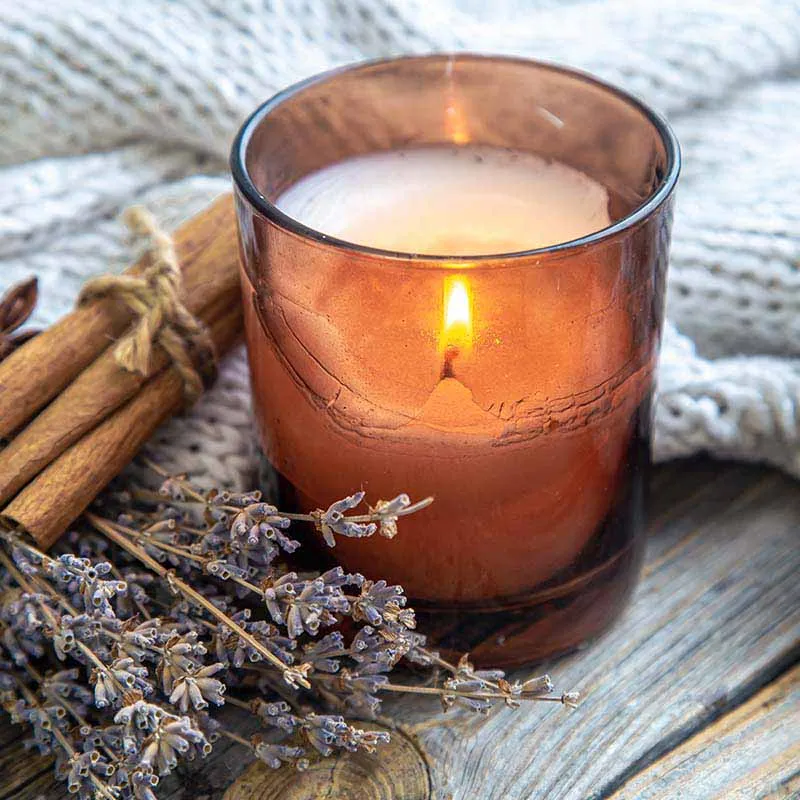
A lit candle shouldn't stay burning for more than 4 hours in a row. This recommendation is based on the physics of combustion and on decades of safety data: after 4 hours, the container overheats, the wax changes its behaviour and the risk of household accidents goes up.
The 4-hour limit isn't arbitrary. A candle that has been burning for 5 hours has heated its container so much that touching it can cause burns. The liquid wax around the wick has reached temperatures where the flame's behaviour changes: it becomes taller, less stable, and consumes oxygen less efficiently.
This guide explains why this limit exists, how to recognise when a candle is overheating, and what to do before putting it out to keep it safe and extend its life.
Why 4 Hours Is the Practical Limit
Candles have physical limits that go beyond common sense. A candle that works perfectly for two hours can become unpredictable in the third.
Container Overheating
A soy candle in a glass container reaches surface temperatures of 50-60°C after 4 hours of continuous burning. The conductive glass spreads this heat across the whole base and the side walls. A person who tries to move the candle without realising how hot it is can suffer second-degree burns.
The problem isn't just the temperature of the container. It's that this temperature keeps rising while the candle stays lit. At 6 hours, the container can be at 70°C or more — a temperature where accidental contact causes immediate burns.
Wooden wick: Candles with a wooden wick build up heat faster than cotton ones. The wood conducts heat to the surrounding wax more efficiently, which can reduce the safe time to 3 hours in small containers.
Tunnelling and Loss of Efficiency
Tunnelling happens when the wick only consumes the wax in the centre, leaving a tunnel surrounded by intact wax on the walls. This problem gets worse with the hours: the deeper the tunnel, the harder it is for the heat of the flame to reach the wax at the edges.
A candle that has developed tunnelling after 4-5 hours will keep working, but it will waste between 30% and 50% of its wax. The flame gets smaller because it's 'suffocated' at the bottom of the tunnel, and the hot throw — the ability to disperse fragrance — drops sharply.
Tunnelling isn't just a cosmetic problem. A tunnelled candle burns the centre faster, which can make the wick drown in liquid wax or form a pool of wax too deep around the wick.
Changes in Combustion Quality
After 4 hours, a candle's flame changes its behaviour in a way that increases the risk. The wax pool around the wick has expanded and deepened to the point where the wick is partly submerged in hot liquid wax. This causes several problems:
The flame becomes taller and less stable. A normal candle flame measures 1-2 centimetres; after 4 hours it can reach 3-4 centimetres and flicker constantly.
The combustion generates more black smoke. This happens because the wick can't efficiently process all the wax it's absorbing from the expanded pool.
Oxygen consumption rises. An overheated candle consumes more oxygen from the surrounding air, which can create problems in small or poorly ventilated rooms.
How to Detect When a Candle Is Overheating
The difference between a candle working normally and one overheating is visible well before the 4-hour mark if you know what to look for.
Immediate Visual Signs
Excessively tall flame: If the flame measures more than 2.5 centimetres, the candle is consuming wax faster than it can process it efficiently.
Constant black smoke: A thread of black smoke that doesn't disappear after a few minutes indicates incomplete combustion. The wick is absorbing more wax than it can burn cleanly.
Very deep wax pool: If the liquid wax around the wick is more than 6-8 millimetres deep, the candle has been burning too long.
Constant flickering: A flame that flickers constantly with no draughts indicates instability in the combustion.
Tactile Signs
Container hot to the touch: If touching the container is uncomfortable or painful, the candle should be put out immediately.
Excessive radiant heat: A normal candle radiates gentle heat within a radius of 10-15 centimetres. If you feel intense heat at 20-30 centimetres away, it's overheated.
Very hot container base: Even if the side walls aren't excessively hot, a base that burns when you touch it indicates internal overheating.
What to Do Before Putting the Candle Out
The way you put a candle out after several hours determines both your immediate safety and how the candle behaves in future sessions.
The No-Movement Rule
Never move a candle with liquid wax. Melted wax at 60-70°C can cause serious burns if it spills onto the skin. Moving a lit candle can also make the liquid wax splash or bring the flame into contact with flammable materials.
Wait at least 30 minutes after putting it out before moving the candle. The wax will start to solidify and the container will start to cool, but it will still be hot to the touch.
The Correct Way to Put It Out
Don't blow the candle out. Blowing can make the liquid wax splash or create excessive smoke. Use a snuffer, cover the flame with a lid made for candles, or use tongs to briefly dip the wick into the liquid wax and then straighten it.
Centre the wick while the wax is liquid. After putting out the flame, use tongs or a wick-centring tool to position the wick in the centre of the wax pool. This prevents tunnelling in the next session.
Trim the wick if it's very long. If the wick measures more than 6 millimetres, trim it to 4-5 millimetres before lighting the candle next time. A long wick is one of the main causes of overheating.
Basic Safety Rules for Prolonged Use
Long candle sessions require extra precautions that don't apply during short sessions.
Adequate Ventilation
A lit candle consumes oxygen and produces carbon dioxide. In a small, unventilated room, several candles or a single candle over many hours can reduce the air quality. Make sure there's air circulation, especially if you plan to use candles during long events.
Safe Distance
Keep at least 30 centimetres between lit candles and any flammable material: curtains, paper, decorations, other wax products. This distance should increase if the candle has been burning for several hours and is radiating more heat than normal.
Constant Supervision
A lit candle should never be left unattended, regardless of how long it has been burning. The risk of accidents rises exponentially when there's no one present to spot problems like flames that are too tall, overheated containers, or materials getting too close to the flame.
Stable, Heat-Resistant Surface
Place candles on surfaces that can take both the weight and the heat of the container. An unprotected wooden table can develop burn marks after several hours of contact with a hot container. Use bases of ceramic, metal, or thick glass.
Exceptions and Special Cases
Not all candles follow the same time rules, but the safety principles stay constant.
Votive Candles and Tea Lights
Votive candles and tea lights have different rules because their small size means they burn up completely in 4-6 hours. These candles are designed to burn completely in a single session, but they need appropriate holders that can contain all the liquid wax without overheating.
A tea light in a metal holder can make the metal too hot to handle after 2-3 hours. Holders of thick glass or ceramic spread the heat better and are safer for prolonged use.
Outdoor Candles
Candles designed for outdoor use — citronella, torches, candles in metal containers — often have thicker wicks and are formulated to withstand wind and damp. This doesn't mean they can stay lit indefinitely.
A citronella candle in a metal container can stay lit longer than an indoor candle, but the container will get so hot that it will be impossible to handle without protection. The 4-hour rule still applies for handling safety.
Events and Celebrations
During weddings, long dinners, or events lasting more than 4 hours, the solution isn't to leave the same candles burning the whole time. The most common mistake here is thinking a special occasion justifies skipping the safety rules. The safe practice is:
- Light the candles 30 minutes before the event
- Put them out after 3-4 hours
- Let them cool for 1 hour
- You can relight them for the final phase of the event
Alternatively, use sets of votive candles or tea lights that burn up completely and can be replaced during the event.
Signs That a Candle Has Been Burning Too Long
Some signs of excessive use appear immediately, others only after several long sessions.
Damage to the Candle Itself
Deep crater: If the candle has developed a central crater more than 1 centimetre deep, it has repeatedly been burning too many consecutive hours.
Very long, charred wick: A wick that has lengthened more than 1 centimetre and has a black, brittle tip indicates excessive combustion.
Discoloured wax: The wax around the wick can turn yellowish or greyish due to constant excessive heat.
Damage to the Surroundings
Heat mark on the surface: Circles or stains on the table where the candle was resting indicate that the container reached excessive temperatures.
Persistent smoke smell: A smoke smell that lingers in the room after putting the candle out suggests incomplete combustion over long periods.
Soot residue: Black marks on walls, ceilings, or nearby objects indicate that the candle produced excess smoke during its use.
FAQ
Can you leave a candle burning all night? No. A candle should never be left burning unattended, let alone for 8 consecutive hours. The risk of overheating, containers that crack from excessive heat, and possible accidents is too high. If you need light or fragrance during the night, use electric alternatives.
What happens if I've already had a candle burning for 6 hours? Put it out immediately and let it cool completely before handling it. Check whether the container has cracks or heat damage. The next time you use it, trim the wick to 4-5 millimetres and watch the burn time more closely. One excessive session doesn't ruin the candle, but repeating it can damage it permanently.
Can expensive candles stay lit longer? No. The price of a candle doesn't change the physics of combustion. A premium soy candle is still soy wax, and its container still heats up after 4 hours. More expensive candles may have a better-quality wick or thicker containers, but the maximum-time rule stays the same.
Is it different for candles with a wooden wick? Candles with a wooden wick tend to heat up faster than cotton ones. The safe limit can be 3 hours instead of 4, especially in small containers. The wooden wick conducts heat more efficiently, which speeds up the heating of the container and increases the risk of overheating.
If you want to enjoy candles over long periods safely, consider using several small candles you can replace during the event, instead of keeping the same candles burning for hours. → See candle options at Candeliss →