How to make massage candles
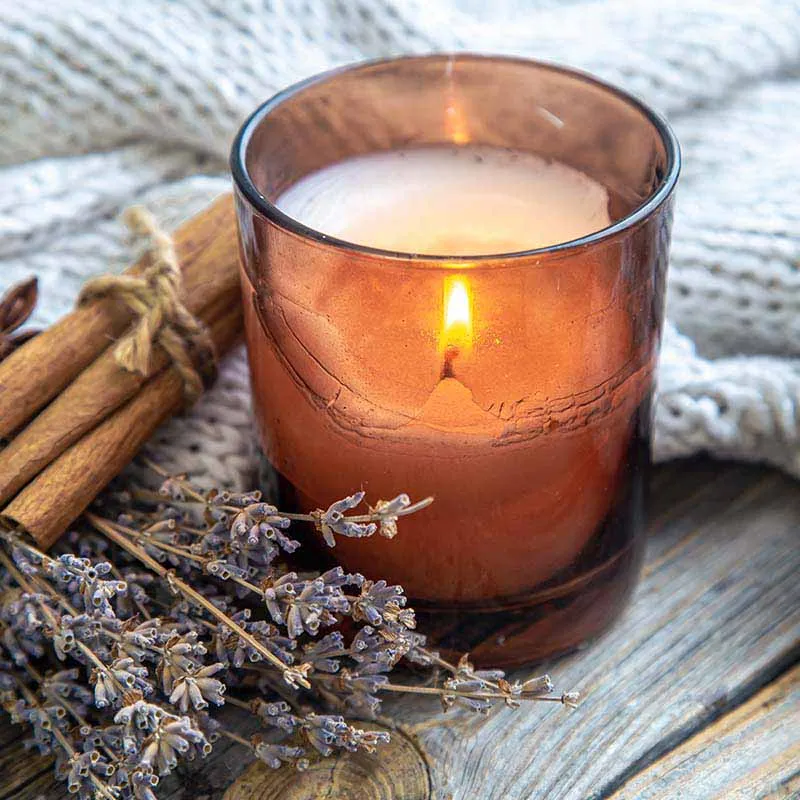
Massage candles are made with a low-melting-point wax that melts at body temperature, letting you pour the liquid wax straight onto the skin for a massage. The main difference from decorative candles is the wax: it must melt between 37-40°C and contain oils that nourish the skin rather than damage it.
Conventional soy wax isn't suitable for this purpose — its melting temperature is too high and can cause burns. Massage candles need specific waxes like shea butter, coconut wax or blends formulated for skin contact.
Differences Between a Massage Candle and a Decorative Candle
The most dangerous difference that gets overlooked: a melted scented candle can cause second-degree burns if poured onto the skin. A massage candle should be warm, not hot.
A decorative candle is designed to burn in a container and project fragrance into the room. A massage candle is formulated to turn into massage oil when it melts.
Melting temperature: Decorative candles use waxes with a melting point between 52-58°C. At that temperature, the liquid wax burns the skin on contact. Massage candles need waxes that melt between 37-40°C — barely above body temperature.
Composition: Decorative wax can include paraffin, stearin or additives to improve the hot throw. Massage wax should contain only ingredients that are safe for skin contact: shea butter, coconut wax, fractionated coconut oil or beeswax in specific proportions.
Fragrances: The essential oils that work well in the room can be irritating in direct contact with the skin. Massage candles need fragrances formulated specifically for topical use, at lower concentrations than scented candles.
The most common mistake is trying to use conventional soy wax by adding carrier oils. The result is a mix that doesn't solidify correctly or that still has a melting point too high for safe use on skin.
Suitable Waxes for Massage Candles
The wrong wax temperature is the cause of most accidents with massage candles. A mix that works in winter can become dangerous in summer if it wasn't formulated correctly.
Shea butter is the most common base for homemade massage candles. Its melting point is between 32-38°C and it has well-known moisturising properties. It can be used on its own or as the base for 60-70% of the total mix.
Pure coconut wax has a melting point of about 24-26°C, too low to keep a solid shape at room temperature in summer. It's used as a 20-30% component to lower the melting point of other, harder waxes.
Commercial blends for massage candles already come formulated with the right proportion of different waxes. They're the most predictable option for the maker who's starting out: they melt homogeneously and keep consistency between batches.
A typical homemade mix combines 65% shea butter, 25% coconut wax and 10% carrier oil (jojoba or fractionated coconut). This proportion produces a candle that stays solid up to 28-30°C ambient and melts completely between 37-40°C.
Beeswax: Some makers include it at 5-10% to give firmness to the mix, but it has a high melting point (62-64°C) that can counteract the goal of a low temperature. If it's used, it should be in very small proportions and you should always test the final temperature of the mix.
What doesn't work for massage candles: conventional soy wax, paraffin, microcrystalline waxes, stearic acid. They all have melting points above 45°C.
Carrier Oils and Skin-Safe Fragrances
The wrong oil can cause allergic reactions hours after the massage, when it's no longer obvious what the cause was. Carrier oils must have a documented history of topical use.
Carrier oils don't just lower the melting point — they also determine how the melted wax feels on the skin. Fractionated coconut oil is liquid at room temperature, absorbs quickly and leaves no greasy feel. It can be used up to 15% of the total mix.
Jojoba oil is technically a liquid wax, not an oil. It has a long shelf life, absorbs well and is compatible with most skin types. Recommended proportion: 10-12% of the total mix.
Sweet almond oil works well on normal skin, but can cause reactions in people with a nut allergy. Grapeseed oil is more allergy-neutral but has a shorter shelf life than jojoba.
For fragrances, essential oils should be used at much lower concentrations than in decorative candles. Lavender is the safest option: a maximum of 1% of the total mix. Roman chamomile and ylang-ylang also have a history of topical use, but always at concentrations below 0.5%.
What to avoid in massage candles: citrus essential oils (bergamot, lemon, orange) because they can cause photosensitivity. Cinnamon, clove, mint — all too intense for direct skin contact. Synthetic fragrances formulated for scented candles aren't automatically safe for skin.
A well-formulated massage candle may have no added fragrance. The natural aroma of the shea butter and the carrier oil is enough for many users.
The Making Process
The temperature during the process determines whether the final candle will be safe. Overheating can degrade the properties of the carrier oils and create dangerous hot spots.
Preparation: Calculate the exact amounts before you start melting. For 200g of massage candle: 130g shea butter, 50g coconut wax, 20g jojoba oil. If you add fragrance, reduce the carrier oil proportionally.
Melting: Use a bain-marie at low temperature. The shea butter melts first, then add the chopped coconut wax. Stir gently — air bubbles in a massage candle are more of a problem than in a decorative one, because the wax is going to be poured onto skin.
The maximum temperature during the process shouldn't exceed 60°C. At higher temperatures the properties of the carrier oils can degrade.
Adding the oils: Take it off the heat and let the temperature drop to 45-50°C before adding carrier oil and fragrance. Jojoba oil incorporates well at this temperature. Stir for 1-2 minutes to homogenise.
Pouring: Pour into the final container at a temperature between 40-45°C. Small metal containers (tuna-tin type) work well because they conduct heat evenly and warm up quickly when the wick is lit.
Wick: Use a natural cotton wick, thinner than for decorative candles of the same diameter. The aim isn't a big flame — just enough heat to create a pool of liquid wax 2-3 cm in diameter.
Curing: Let it solidify completely before lighting it for the first time. Massage candles need 24-48 hours for all the components to integrate correctly.
Safe Use of Massage Candles
The most dangerous mistake: assuming that a candle labelled 'massage' is automatically safe. Always do a temperature test and a patch test before the first full use.
Before the first use: Do a patch test on a small area of skin. Even if the ingredients are safe individually, allergic reactions are unpredictable. Apply a drop of melted wax to the forearm and wait 15-20 minutes.
During use: Light the candle 10-15 minutes before using it to create a sufficient pool of liquid wax. Put the flame out before pouring — never pour wax with the wick lit. The wax should be warm to the touch, not hot.
Pouring height: Pour from a few centimetres away to avoid splashes. Wax at 40°C feels pleasant if applied gradually, but can be uncomfortable if it falls from a height in a single drop.
Application areas: Avoid the eye area, mucous membranes and any irritated skin or open wounds. The back, shoulders and limbs are the safest areas to start with.
What not to do: use massage candles if either person has a known allergy to any component, use them during pregnancy without prior medical advice, or apply the wax if it feels too hot to the touch on the wrist.
Storage and Conservation
The oil-rich composition makes these candles deteriorate faster than decorative ones. Rancid oil doesn't just smell bad — it can cause skin irritation.
Massage candles have a shorter shelf life than decorative ones because they contain carrier oils that can go rancid. Typical shelf life: 6-8 months if stored in a cool, dry place, up to 12 months if they include jojoba oil as a base.
Signs of deterioration: colour change (especially yellowing), rancid smell, separation of components (oily patches on the surface), grainy texture when melted.
Storage: Stable room temperature, avoid direct sunlight. Massage candles with a high proportion of coconut wax can soften too much in summer if stored in places with a temperature above 28°C.
Containers with a tight-fitting lid help preserve the mix better, especially if they contain fragrances that can evaporate over time.
Variations and Customisations
Customising a massage candle requires understanding how each oil affects the final texture. A 5% change in the composition can make the difference between a pleasant experience and a sticky one.
For oily skin: Increase the proportion of fractionated coconut oil and reduce the shea butter. Coconut oil absorbs faster and leaves less greasy residue.
For dry skin: Add 5% avocado oil or rosehip oil. Both have better moisturising properties than jojoba, but they also shorten the candle's shelf life.
Fragrance-free version: Ideal for sensitive skin or people who prefer the natural aroma of shea butter. You can add vitamin E (0.5% of the total mix) as a natural antioxidant.
Solid massage candles: Increase the proportion of shea butter to 75-80% and remove the liquid oils. The result is harder at room temperature but melts easily with body heat.
FAQ
Can you use normal soy wax to make massage candles? No. Conventional soy wax has a melting point between 52-58°C, too high for safe skin contact. You need specific waxes like shea butter or coconut wax that melt at body temperature (37-40°C).
How long can you use a massage candle for? A 200g massage candle provides around 8-10 sessions of use, depending on how much wax you pour each time. The candle is used up faster than a decorative one because liquid wax is removed from the pool during use.
Is it safe to use essential oils in massage candles? Only some essential oils are safe for direct skin contact, and at very low concentrations (a maximum of 1% of the total mix). Lavender is the safest option. Avoid citrus oils, cinnamon, clove and mint, which can cause irritation or photosensitivity.
What should I do if the wax feels too hot when it melts? Put the candle out immediately and let it cool. A correctly formulated massage candle should never feel hot to the touch — only warm. If it happens consistently, the mix has too many high-melting-point waxes and needs reformulating.
Can you make massage candles without carrier oils? It isn't advisable. Carrier oils (jojoba, fractionated coconut) don't just lower the melting point — they also bring beneficial properties for the skin and make the melted wax spread better during the massage.
Can massage candles be used as normal decorative candles? Yes, but they'll have less fragrance projection than a conventional scented candle, because skin-safe fragrances are used at lower concentrations. They'll also burn up faster if only used for lighting, because they're formulated to melt at a lower temperature.
If you want to start with massage candles without complications, commercial blends made specifically for this use remove the work of calculating proportions and guarantee a safe melting point from the first attempt. → See options at candeliss.com →