Rapeseed wax for candles: plant-based, good adhesion
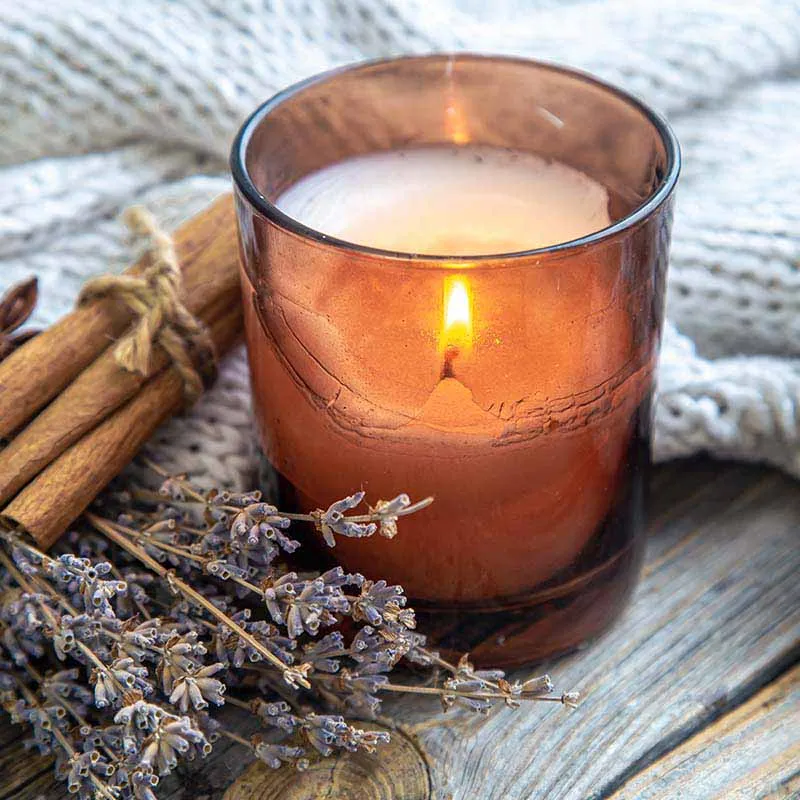
Rapeseed wax (also sold as rapeseed wax or, loosely, canola wax) works well for container candles: it has good adhesion to glass, holds fragrance and comes from a crop widely grown across Europe, which shortens the supply chain compared with imported soy. It isn't superior to soy in every respect, but in certain contexts — price, logistics, brand positioning — it's worth considering.
What Rapeseed Wax Is and Where It Comes From
Rapeseed oil is one of the most widespread agricultural crops in Western Europe: France, Germany, Poland and the United Kingdom all produce it in large volumes. Rapeseed wax: a vegetable wax obtained by hydrogenating rapeseed oil (Brassica napus). The process turns the liquid oil into a solid wax with a melting point suited to candle making. In English-speaking markets it's also known as rapeseed wax or, somewhat imprecisely, as canola wax.
Unlike soy wax, whose production is concentrated in North America and Brazil, rapeseed wax has a predominantly European supply chain. For a maker working in Europe, that usually means shorter transit times, a smaller transport carbon footprint and — in periods of global logistics strain — a lower risk of running out of stock because of import problems.
The first time a maker works with rapeseed, what they notice immediately is the colour: whiter and more opaque than soy in its natural state, without the yellowish tone that sometimes appears in additive-free soy blocks. That opacity is structural, not cosmetic. What most people don't expect is that this difference in appearance doesn't mean a radically different way of working — rapeseed melts, pours and cures very much like soy.
Technical Properties Compared with Soy
With the origin clear, the concrete properties are what determine whether the switch makes sense for a specific process.
Rapeseed wax and soy wax have more in common than they have differences: both are plant-based, both are used mainly in container candles, and both behave acceptably with fragrance. The differences are of degree, not of category.
Melting point: Rapeseed wax tends to have a slightly higher melting point than standard soy wax, though this varies with the supplier and the degree of hydrogenation. In practice, a maker coming from soy usually finds that rapeseed behaves similarly during the pour, at comparable working temperatures. Always confirm the specifications with the supplier before adjusting the process.
Adhesion to the container: This is where rapeseed has its most consistent advantage. Side adhesion to glass is usually better than soy's, which reduces the sinkholes and side gaps that some makers get with soy in hot summers or warm rooms. A maker pours their first batch of rapeseed in August, with the workshop at 30ºC. The candle comes out with a clean surface and no side gaps — something that with soy required cooling the jar in a controlled area. The most common mistake here is assuming that good adhesion means you can skip the second pour — rapeseed may still need it if cooling isn't controlled.
Frosting: Soy wax has a natural tendency to frost (the white crystalline layer on the surface). Rapeseed wax is less prone to this, which can simplify the process for makers producing smooth-surfaced candles who don't want to invest time in frosting-control techniques.
Hot throw: Rapeseed's scent performance while burning is comparable to soy of similar quality. The real difference depends more on the fragrance, the load used and the pouring temperature than on the type of wax itself. Anyone expecting a noticeably stronger hot throw than soy simply by switching to rapeseed will probably be disappointed.
| Property | Rapeseed wax | Soy wax |
|---|---|---|
| Origin | Europe (mainly) | North America / Brazil |
| Adhesion to glass | Good to very good | Variable (good in cool conditions) |
| Frosting | Infrequent | Characteristic in pure soy |
| Hot throw | Comparable | Comparable |
| Natural colour | Opaque white | Ivory / yellowish |
| Availability in Europe | Growing | Wide |
When It Makes Sense to Choose It
Rapeseed isn't better than soy — it's different in some respects and similar in most. It makes sense to consider it in three situations.
The first is logistics: if your usual soy supplier has supply problems, European-origin rapeseed can be an alternative with less dependence on the international logistics chain. The question isn't "which is the best wax?" but "which can I keep available consistently?". A candle business that halts production for lack of material has a bigger problem than the choice of wax.
The second is brand positioning. A maker selling candles with a message of local production or European sustainability can use rapeseed's origin as part of the product narrative. This doesn't work with every customer, but it does with a segment that reads labels and cares where the ingredients come from. A rapeseed candle of French or German production has a more compact, verifiable origin story than one made from imported soy.
The third scenario is technical and concrete: if soy frosting is a constant problem in the maker's specific context (a hot workshop, untreated-surface candles, a process with no cooling-temperature control), switching to rapeseed can simplify the process without sacrificing performance. What many makers discover on their first rapeseed batch is that the surface comes out cleaner naturally, without changing anything else in the process.
Availability
Choosing rapeseed makes sense in those three scenarios — as long as you can source it consistently. The logistics situation has improved significantly.
Rapeseed wax was hard to find a few years ago — supply was concentrated in northern-European distributors. That has changed. Today there are distributors working with rapeseed wax in formats suited to the maker (1kg bags, 5kg and 10kg sacks), not just industrial bulk. Availability is still lower than soy's, but it's no longer a direct-import material for anyone buying in craft-use quantities.
The most common format on the craft market is the granule or flake — just like soy — which makes the transition straightforward: the process of weighing, melting and pouring is practically identical.
FAQ
Is rapeseed wax vegan? Yes, rapeseed wax is 100% plant-based: it's obtained by hydrogenating the oil of the Brassica napus plant, with no animal-origin products in the process. It's suitable for makers who want to label their candles as vegan, provided the rest of the ingredients (wicks, fragrances) meet the same criterion.
Can I blend rapeseed wax with soy wax? Yes. Many makers use rapeseed-and-soy blends to combine the adhesion of the first with the scent behaviour of the second. The ratios depend on the result you're after — there's no universal standard blend. The best starting point is to experiment in small batches and document the results before scaling.
Does rapeseed wax need a different pouring process from soy? The process is similar, but it's worth verifying the melting point and recommended pouring temperature with each supplier. Each degree of hydrogenation can change the behaviour. The general rule is the same as with any new wax: make a test batch before committing a whole production run.
Does rapeseed wax have a scent of its own that affects fragrances? Quality rapeseed wax has a very faint or practically absent scent when melted, similar to soy. A wax with a strong smell before any fragrance is added is a sign of lower-quality processing or a batch that has lost properties through poor storage. If the batch smells noticeably without fragrance, don't continue with production.
If you're weighing up alternatives to soy wax for your production, Candeliss rapeseed wax is available in maker formats. → See rapeseed wax at candeliss.com →