Types of candles
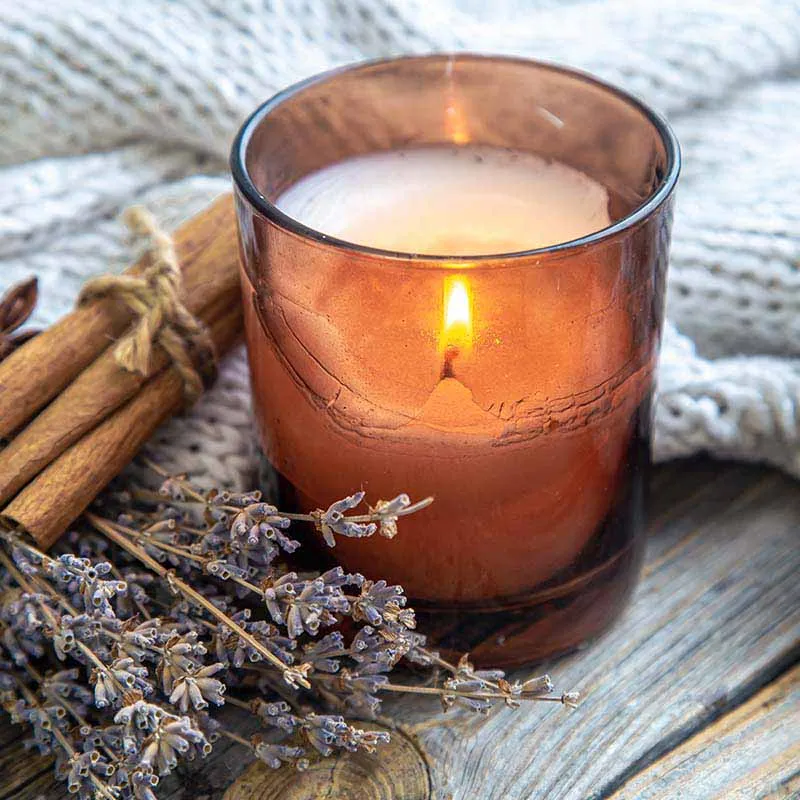
Types of candles are classified by shape, by material and by use. The main shapes are pillar, votive, tea light, floating and container. The most common materials are soy wax, paraffin, beeswax and stearic acid in pastilles for pearled candles. The right type depends on the context of use: scent, decoration, burn time or ceremony.
The Five Main Shapes
A candle's shape isn't just aesthetic — it determines whether it can be used without a container, how long it lasts, and whether it needs a holder or can sit directly on a surface. Each format has a use case where it performs best.
Pillar candles are the freestanding format par excellence. They hold themselves up, keep their shape well at room temperature and allow a worked surface finish — textures, engravings, layered colours. The standard material for pillars is paraffin or harder waxes, because pure soy wax isn't rigid enough to stand without a container.
Votive candles are small versions designed to burn inside a glass or metal holder. Their small diameter makes the liquid wax pool wide relative to the total volume, which makes them ideal for scenting a space in short sessions. They're commonly used at events, in restaurants and in repeated household rituals.
The third format — tea lights — is the simplest and the most underrated. They come in aluminium or clear plastic cups, burn for between one and four hours and are used mainly as a decorative element or to heat scent diffusers. Their low cost per unit makes them the standard format for events where replacement is constant.
What most buyers discover when choosing between formats is that the holder defines both the style and the risk: a votive in the wrong holder can overheat the container; a tea light without a cup on a porous surface can leave a mark. The format isn't only aesthetic.
A hobbyist who wanted to make candles for their first craft fair chose pillars because they seemed more 'professional'. The process cost them four failed attempts — the soy wax they had wasn't hard enough to hold the shape. They ended up making container candles in glass jars and sold the whole stock. The right format isn't the one that impresses most — it's the one you can produce well with the material you have.
Floating candles are designed to burn on water. They have a flat base and a centre of gravity that lets them float in balance. They're used in containers with water as a decorative element — weddings, spa, table decoration. They need a wax dense enough not to absorb water from the base.
The most produced format in the craft sector is the container candle: the wax is poured into a glass, ceramic or metal container that acts as a permanent support. Soy wax is the most used material for this format because it has very good adhesion to glass. If you want to make candles at home without specialised equipment, this is the most accessible starting point.
The most visual format of all — pearled candles — deserves a note apart: they don't use melted wax but stearic acid in pastilles poured cold directly over a centred wick. No heat, no curing time. For more detail, read what pearled candles are and how they work.
With the shape clear, the material is what defines how the candle will behave when it burns.
The Material Defines the Behaviour
Buying a candle because 'it's soy' without understanding what that material implies is the most common way to end up disappointed. Soy wax, paraffin, beeswax and stearic acid aren't interchangeable — each has properties that make it better or worse depending on the format and the use.
Soy wax is the most used material in the craft sector for container candles. It's plant-based, has very good adhesion to glass and ceramic, and produces a moderate hot throw — the scent intensity when burning. Its most debated characteristic is frosting: a white surface crystallisation that's natural to the material and doesn't affect the burn or the scent. For anyone making candles at home or buying them handmade, soy wax in a container is the reference standard.
Hot throw: the intensity of the scent a candle releases while burning. It depends on the type of wax, the fragrance, the percentage used and the room temperature.
Paraffin is the dominant material in industry at scale. It produces a stronger hot throw than soy, doesn't frost and is the best material for pillar candles and moulded figures because it has the rigidity that pure plant waxes don't reach. The narrative about its toxicity has no solid scientific basis for use in normal ventilation conditions. To understand the full comparison, read paraffin for candles: when it makes sense against soy wax.
Beeswax is the only animal-origin wax on this list. It has a higher melting point than the others, a naturally slightly honeyed scent and is the standard option for high-end handmade pillar candles. Its significantly higher cost makes it impractical for volume production.
Stearic acid in pastilles isn't technically a wax — it's a solid plant-based fatty acid used without melting to make pearled candles. It's the most accessible material for anyone who wants to make their first candle without a thermometer or special equipment.
A hobbyist looking for 'handmade candles to make at home' came in through the container-candle tutorials with soy. When they discovered pearled candles, that's what they ended up making: nothing to melt, no equipment, in ten minutes. The type of material completely defines the experience of the process, not just the result.
The table below crosses shape and material with the most common use for each combination.
Reference Table
| Format | Usual material | Hot throw | Freestanding | Main use |
|---|---|---|---|---|
| Pillar | Paraffin, beeswax | Moderate-high | Yes | Decoration, draws visual attention |
| Votive | Paraffin, soy | Moderate | No (uses holder) | Event, ritual, occasional scenting |
| Tea light | Paraffin | Low | No (in cup) | Decoration, heating a diffuser |
| Floating | Paraffin, hard wax | No fragrance usually | On water | Water decoration |
| Container | Soy wax, soy-paraffin | Moderate-high | No | Scenting, daily home use |
| Pearled | Stearic acid pastilles | Low (no fragrance) | No | Visual decoration, gift |
With the full map, the practical question is which type works best in each specific situation.
Which Type of Candle to Use by Context
The same space can need different candles depending on the moment: decorating a dinner table isn't the same as scenting a daily-use living room or lighting a terrace in summer.
The most common mistake of the new buyer is choosing the format they like visually without assessing whether the context of use allows it. A pillar candle that falls over when lit because it has no flat base, or a tea light that doesn't reach the fragrance level expected of it: the format matters as much as the material.
To scent a room continuously, the container candle with soy wax or a soy-paraffin blend in a high-quality fragrance is the option with the best performance for the price. The container format keeps the heat pool close to the wick, which improves scent release.
For visual decoration without scent as a priority — centre table, sideboard, ceremony — pearled candles and pillars are the formats with the most visual presence. Pillars allow textured finishes; pearled candles have a unique mineral texture that no other format replicates.
For use at events — weddings, dinners, public spaces — votives and tea lights are the standard because they're cheap per unit, easy to replace and don't require anyone to manage an expensive holder. Floating candles add a distinctive visual element when water is available. An event organiser who ordered votive candles for a 150-person dinner and arrived on the day without enough holders had to improvise with kitchen containers. Tea lights in their own cups don't need an external holder — that detail can save a production.
For emergencies or camping — light without electrical dependence — tea lights and paraffin votives are the most practical for their predictable burn time and price per unit.
If you want to make any of these types at home, the guide to materials for making candles explains what you need for each format. The basic materials kit to get started is available at the Candeliss shop.
FAQ
Which types of candles last longest? Pillar and container candles with soy wax usually last longer per unit, because the volume of material is greater. Tea lights and votives have shorter burn times by design — between one and four hours per unit. The exact burn time depends on the wick diameter, the type of wax and the size of the container.
What's the difference between a votive candle and a tea light? The votive candle is larger, needs a specific holder because it melts completely as it burns and lasts several hours. The tea light comes in its own aluminium or plastic cup, is smaller and is designed for a single use of one to four hours. Tea lights are cheaper per unit; votives, more versatile in a decorative context.
Are soy candles better than paraffin ones? It depends on the use. Soy container candles have better adhesion to glass and a plant-based origin. Paraffin candles have a stronger hot throw and are the right material for pillar candles and figures that have to hold their shape without a container. There's no universally better option — each material has use cases where it's superior to the other.
Can I make candles at home without special equipment? Yes, with pearled candles. Stearic acid in pastilles is poured cold directly over a wick centred in the container — no melting, no thermometer, no curing time. For soy-wax container candles, the basic process needs a pan for a bain-marie and a kitchen thermometer. In both cases, the starter kit includes the materials calibrated so the first candle works.