What you need to make candles: complete list of materials
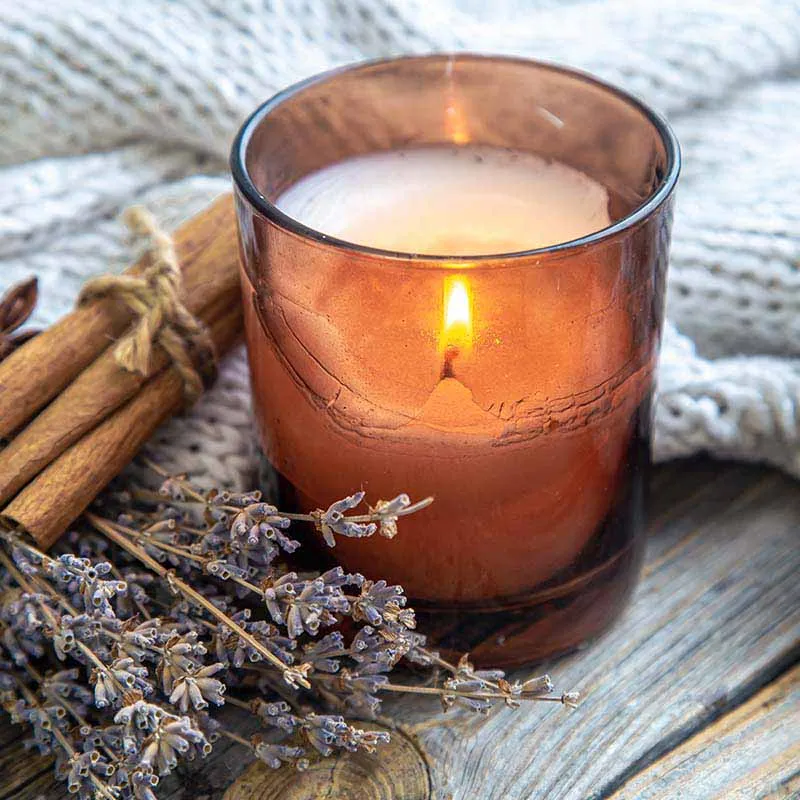
To make candles you need, at a minimum, wax, a wick and a container. Fragrance, colourant and a thermometer improve the result but are optional. With those three basic elements you can make your first candle.
The Three Essential Materials
What makes the first candle fail is almost never the process — it's having chosen one of these three elements badly, or not understanding what each one does.
Wax: the base material. The type of wax determines how the candle behaves, how it looks, and its compatibility with fragrances and colourants. Soy wax in granules is the most common entry point for beginners: it melts at a relatively low temperature, is plant-based and has good adhesion to glass containers. Paraffin produces a stronger hot throw and a smoother finish, but needs more attention during the melting process. For pearled candles — the decorative format that requires no melting — the material isn't a conventional wax but stearic acid in granules, which is poured cold directly.
For a full comparison of types of wax and when to use each one, read the guide to types of candle wax.
Wick: the backbone of the candle. Without a wick there's no combustion. The size must match the diameter of the container: a wick that's too thin produces a small flame that creates tunnelling — it burns the centre without consuming the edges — and a wick that's too thick creates an excessive flame that consumes the wax very quickly.
Tunnelling: a burn defect in which the flame consumes the central axis of the candle without melting the wax at the edges. It happens mainly when the wick is too thin for the diameter of the container or when the first burn is too short.
Wicks are sold on rolls or already cut to standard lengths. For a first project, pre-cut wicks with a centring tab are the most practical because they remove the step of cutting them and adding the metal base.
A hobbyist used the thinnest wick in the pack in an 8 cm diameter jar. Ten minutes in, the centre was burning but the wax edges were still intact. Replacing the wick once the burn has started isn't an option: you have to remake the candle from the beginning.
Container: the candle needs a vessel that withstands the heat of the flame through hours of use. Thick glass and glazed ceramic are the safest and most used. Thin glass can break under sustained heat. Plastic, without exception, isn't compatible with any candle.
The shape also matters: cylindrical and square containers distribute heat better and make an even burn easier. Very irregular shapes or those with walls that are too thin create uneven hot spots.
With the three essentials clear, there's a second group of materials that aren't needed for the candle to work, but are needed for consistent results.
The Materials That Improve the Result
They're optional for the first candle, but they make the difference in consistent results.
The thermometer is the only instrument that tells you when to pour the wax. At too high a temperature, the wax adheres poorly to the container, frosting increases and fragrances can evaporate before the candle solidifies. At too low a temperature, the wax can solidify with bubbles or crack. A basic kitchen thermometer is enough — you don't need one specific to candles.
Frosting: a white crystalline layer that appears on the surface of soy wax candles. It's a natural feature of the material, not a manufacturing defect. It doesn't affect the burn or the scent. It can be reduced by adjusting the pouring temperature, but on 100% natural soy waxes it's hard to eliminate completely.
The ladle or pouring jug with a spout makes pouring easier without spills. Liquid wax stains and is hard to clean once cold. A kitchen jug with a spout works perfectly to start.
The wick centring device is the metal piece that holds the wick vertical while the wax solidifies. Without it, the wick shifts during pouring and the candle burns unevenly. It costs little and removes one of the most common mistakes in early projects.
Fragrance — fragrance oil made specifically for candles — is what makes the candle smell when burning. Diffuser fragrance and cosmetic essential oil won't do.
Flashpoint: the temperature at which a fragrance oil starts to release flammable vapours. Candle fragrances have a flashpoint high enough to withstand the heat of combustion. Diffuser or cosmetic ones don't — they evaporate before the flame activates them.
Candle colourant can be powder, liquid or pastille. It's added to the melted wax before pouring. The colour in liquid state is always more intense than it will be once solid — that has to be taken into account when calculating the amount.
Once you understand what exists and what each element is for, the practical question is what order it makes sense to buy in.
What to Buy First
If this is your first handmade candle project, the most efficient purchase is this: wax (500 g–1 kg to start), wicks with a centring tab in the size recommended for your container, and the containers. With those three elements the process already works.
Fragrance can be added on the second project, once the basic process of melting, pouring and curing is under control. Introducing too many variables on the first attempt makes it harder to identify what went wrong if the result isn't what you expected.
The Candeliss starter kits include the basic materials selected so the first project works. You'll find them at the Candeliss shop.
If you want to make candles without melting anything — a simpler process to start with — read the guide to making pearled candles step by step. For more guides on handmade making, visit the candle-making section.
The scenario that follows shows what happens when the material selection looks right but fails on the two parameters with the least margin for error.
Operational Scenario
A hobbyist bought soy wax, wicks and lavender fragrance to make candles as gifts. The fragrance came from an aromatherapy kit she had at home. She made them without a thermometer, pouring when she thought the wax looked liquid enough.
The candles came out with two problems: the surface was rough with shrinkage marks — a sign of pouring at the wrong temperature — and the scent was barely perceptible when burning because the aromatherapy fragrance had a low flashpoint and had evaporated during melting.
The result looked acceptable while she was making them. The problems only appeared in use.
The lesson isn't that the process is hard. It's that there are two materials where the generic substitute doesn't work: the fragrance (specific to candles, not aromatherapy) and the thermometer (not by eye). The rest of the process has plenty of margin for error. Those two parameters don't.
The questions that follow cover the most common doubts before making the first materials order.
FAQ
How much does it cost to start making candles? With the basic materials — wax, wicks and a container you already have at home — you can make your first candles with a small investment. The cost rises if you add fragrances, colourants and specific tools. For a first project, reusing clean glass jars and buying only wax and wicks is the most economical way to try.
Which wax is best to start with? Soy wax in granules is the most common for beginners: manageable melting temperature, plant origin and good adhesion to glass. If you want to make candles without melting anything, the base material is stearic acid in granules for pearled candles, which needs no heat or special equipment.
Can I use any jar or pot as a container? You can use any thick glass jar that withstands heat: clean preserving jars, kitchen jars, thick stemless glasses. What won't do: thin glass, plastic of any kind, and containers with cracks or no stable base. If you have doubts about the glass, test it with an already-made candle before producing a batch.
Do I need specific equipment or can I use what I have at home? For the first project you can use a small pan for a bain-marie, a kitchen thermometer and a normal ladle. Specific equipment improves consistency but isn't necessary to start. The one piece with no good home substitute is the wick centring device, which costs little and avoids the off-centre-wick mistake.