Types of candle wax: a complete guide to choosing right
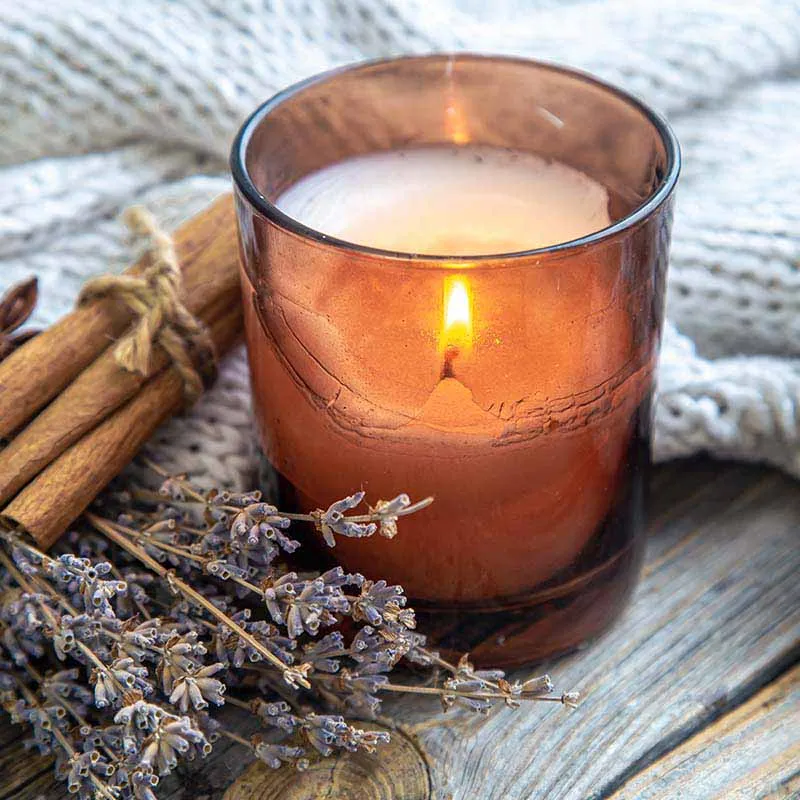
For container candles with fragrance, soy wax is the most common option. For pillars and moulded figures, paraffin. For pearled candles, stearic acid in granules. The choice depends on the type of candle you want to make.
Why the Type of Wax Matters
The wax determines how the candle behaves when it burns, the appearance of the surface, the adhesion to the container, the compatibility with fragrances and whether the material can be moulded or needs a container. Changing the type of wax without adjusting the process produces inconsistent results: the pour temperature, the fragrance ratio and the choice of wick all depend on the material.
Hot throw: the intensity of the scent a candle releases while burning. It depends on the type of wax, the fragrance, the percentage used and the pour temperature. It isn't fixed — it varies between materials and between batches of the same material.
Frosting: the formation of a white crystalline layer on the surface of soy wax candles. It's a natural characteristic of pure soy wax, not a manufacturing defect. It doesn't affect the burn or the scent.
The usual debate in the sector — soy good, paraffin bad — doesn't help you choose well. This article sets out the real properties of each type so the decision is technical, not marketing.
The Five Main Types
What a maker discovers after trying their second or third wax is that each one has a terrain where it performs well and another where it fails in predictable ways. These are the five materials relevant to handmade candle production, with their real properties.
Soy wax. Obtained from hydrogenated soybean oil. At room temperature it's solid, white or ivory in colour. It melts at a relatively low temperature, which makes it easier to work with and reduces the risk of overheating. It has very good adhesion to glass and ceramic, which makes it the most used option for container candles. Frosting is its most debated characteristic: in 100% natural soy waxes, surface crystallisation is inevitable over time. It doesn't affect performance. Its hot throw is moderate — it can be improved with high-quality fragrances or with blends that include paraffin.
Paraffin. A by-product of the petroleum refining process. It's the wax most used historically in industry because it produces a very strong hot throw, doesn't frost, has a smooth surface finish and can be easily moulded for pillar candles, figures and tea lights. The narrative about its toxicity lacks rigorous scientific basis: a quality paraffin, burned in a ventilated space, doesn't produce dangerous emission levels. The real problem with paraffin is in the quality of the material — low-quality paraffin produces more combustion residue. For the full comparison, read soy wax vs paraffin.
Rapeseed wax. Less well known than soy or paraffin, but with a clear advantage: it's produced in Europe, which reduces the logistics footprint for the European maker. It has properties similar to soy — plant origin, good adhesion, medium melting temperature — with the difference that its melting point tends to be slightly higher, which makes it more stable in warm environments. It can frost, although usually less than pure soy. For more detail, read rapeseed wax for candles.
A maker who worked with soy wax received a batch labelled "natural wax" from a supplier other than the usual one. The frosting was significantly greater and the adhesion to glass worse. They had changed nothing in their process. The problem was that the batch was an undocumented soy/paraffin blend, and their process was calibrated for pure soy. Material variability without technical specifications is the main source of inconsistent results.
Beeswax. The only animal-origin wax on this list. It has a higher melting point than the others, which makes it useful for pillar candles that need to hold their shape at room temperature. Its natural scent is slightly honeyed. The cost is significantly higher than the other options, which makes it impractical for batch production.
Stearic acid. Technically not a wax — it's a solid fatty acid. In candle making it has two distinct uses: as an additive added to paraffin to harden it and improve mould release, and as the base material of pearled candles, where it's used in granules directly cold, without melting. To understand its use in pearled candles, read what pearled candles are.
The table below lets you compare these properties at a glance before making a decision.
Comparison Table
| Criterion | Soy wax | Paraffin | Rapeseed wax | Beeswax | Stearic acid |
|---|---|---|---|---|---|
| Origin | Plant | Refined petroleum | Plant (EU) | Animal | Plant or animal |
| Hot throw | Moderate | High | Moderate-high | Moderate | — |
| Frosting | Yes (natural) | No | Low | No | — |
| Adhesion to container | Very good | Medium | Good | Good | — |
| Pillar candles / figures | Difficult | Excellent | Difficult | Good | Hardening additive |
| Relative price | Medium | Low-medium | Medium | High | Low-medium |
| Main use | Containers with fragrance | Pillar, figures, tea lights | Containers | Handmade pillar | Pearled candles / paraffin additive |
With the properties summarised, the next step is to apply them to the type of candle you want to make.
How to Choose According to Your Project
For container candles with fragrance, soy wax is the most practical entry point: a manageable melting temperature, adhesion to glass and availability in small-volume formats. Frosting is an aesthetic drawback you have to accept or manage with an adjusted pour temperature.
For pillar candles or moulded ones that need to hold their shape without a container, paraffin is the most practical option. Soy wax and rapeseed wax don't have enough hardness to hold the shape in most conditions. Adding stearic acid as an additive (up to 10%) increases opacity and improves mould release.
For anyone looking for European origin who doesn't want to use paraffin, rapeseed wax is the alternative closest to soy in behaviour, with growing availability in Spain.
For pearled candles — the decorative format that skips the melting process — the material is stearic acid in granules, not a conventional wax.
The scenario that follows shows what happens when the chosen wax isn't the right one for the candle format you want to make.
Operational Scenario
A maker with years of experience in soy container candles decided to expand her catalogue with pillar candles for the Christmas season. She used the same soy wax as for her containers, trying different pour temperatures and longer curing times.
The pillar candles wouldn't hold their shape. They deformed slightly at room temperature on the warmest days and the side surface finish wasn't uniform. She added paraffin in a 30/70 ratio and the results improved, but the finish still wasn't as smooth as that of a pure paraffin.
The problem wasn't the technique — it was the material. Soy wax doesn't have the structural rigidity needed for candles without a container. Not even soy/paraffin blends match the hardness of pure paraffin in moulded pillars.
The lesson: versatility has clear limits. Soy wax is excellent in glass containers; paraffin is excellent in pillars and figures. Trying to make one wax do the work of the other adds complexity without improving the result.
The following questions cover the most common doubts that come up when choosing wax for the first time.
FAQ
Is paraffin toxic? The available scientific evidence doesn't support the claim that quality paraffin, burned in ventilated spaces and with the correct wick, is dangerous to health under normal conditions of use. The most common toxicity claims in the sector come from studies with questioned methodology or from low-quality paraffins. A quality paraffin in a space with normal ventilation is comparable in emissions to other conventional waxes.
Why does soy wax frost? Frosting is a natural crystallisation of soy wax as it cools and over time. It happens because the molecular structure of soy tends to reorganise on the surface. It isn't a manufacturing defect and doesn't affect the burn or the scent. It can be reduced by adjusting the pour temperature, but in 100% pure soy waxes it's a characteristic of the material, not a problem with a definitive solution.
Can I mix types of wax? Yes, blends are common. Soy/paraffin is the most common: the paraffin provides hot throw and hardness; the soy provides adhesion and plant origin. The important thing is that the two materials are compatible in melting point — a very large difference can produce a blend with irregular behaviour as it cools.
Which is the easiest wax to start with? Soy wax in granules is usually the most recommended for beginners because of its manageable melting temperature and ease of dosing. If you want to start without melting anything, the alternative is stearic acid in granules for pearled candles, which doesn't require heat or special equipment.
Is beeswax better than soy? It depends on the use. For pillar candles, beeswax has real advantages: natural hardness, high melting point, its own scent. For container candles with fragrance, soy usually gives better adhesion results for the price it costs. Beeswax is significantly more expensive — that cost only makes sense if its specific properties are needed for the project.
You can find soy wax in granules, stearic acid and starter kits at the Candeliss shop.
To find out what else you need before buying the wax, read the complete list of materials for making candles. All the technical articles about materials are in the candle wax section.